Advocacy Checklist: Requesting a Special Education Evaluation for Down Syndrome
Requesting a special education evaluation starts with a written request, documented concerns, and tracked...

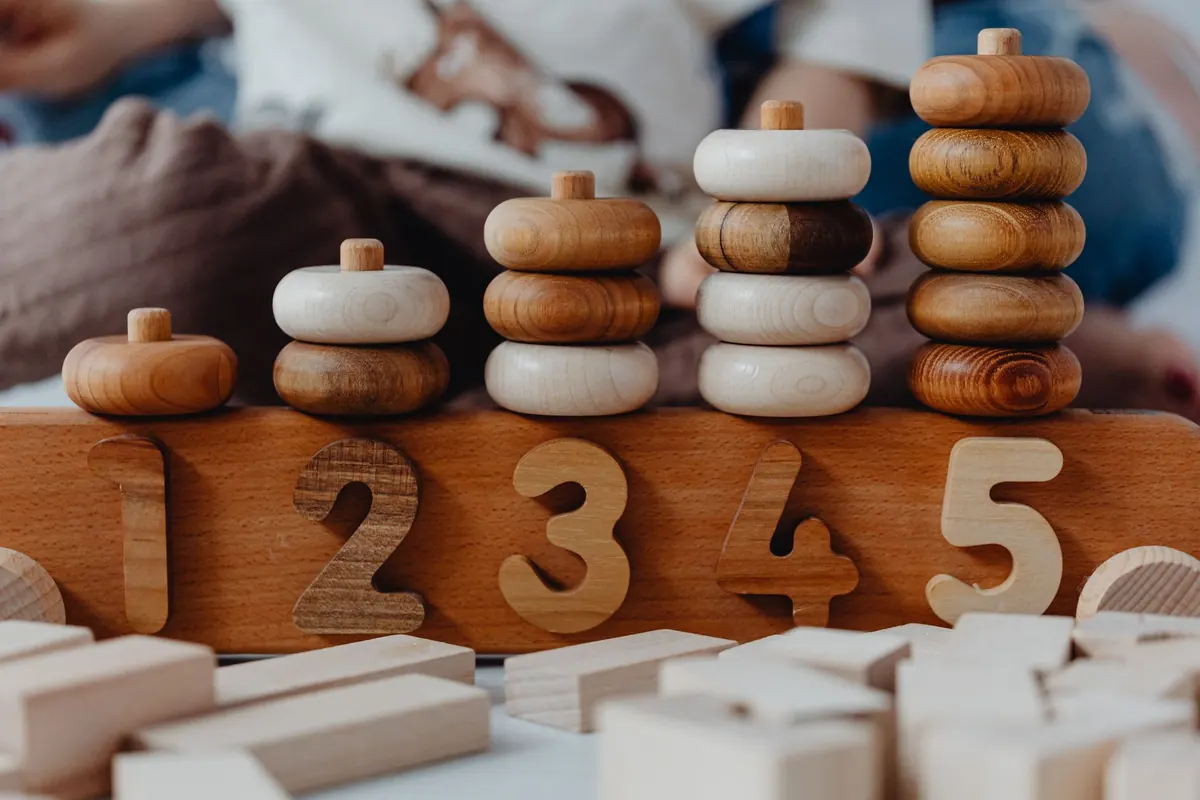
Plenty of learners with Down syndrome can recite numbers to twenty long before they can hand you six pencils on request. That gap between saying numbers and using them is not a sign that math is out of reach. It usually means the activity is asking for too many things at once — listening, remembering, counting, and writing, all in the same minute. The fix is rarely a new curriculum. It is a handful of changes to how the task is presented, practised, and repeated.
Before changing anything, spend a session or two watching how the learner uses numbers without being prompted. Do they fetch two spoons when asked? Do they notice when someone else gets more chips? Do they count objects one at a time, or race through the words while a finger sweeps past three items? Those observations tell you more than a written test will.
Two skills that look identical on paper are worth separating: rote counting (saying the sequence) and rational counting (matching one number to one object). Many learners have the first long before the second. Keep the goal ambitious — real math, real problem solving — and change the route into it, not the destination.
Counting gets easier when it has a physical rhythm. Instead of pointing at a picture, have the learner move each object as it is counted: drop a counter into a cup, slide a bottle cap along the table, push a bead across a string. The movement signals that the item has been counted, which cuts down on double-counting and skipped items.
Keep the range small enough that the learner succeeds most of the time. If five is secure, stay at five for several sessions while the presentation changes, rather than pushing to twenty because the rote count sounds impressive.
Numeral recognition and quantity understanding develop at different speeds, and a written equation asks for both at once. Give quantity plenty of airtime first. Ask the learner to build a set to match a numeral card, work out which of two plates has more crackers, or show "one more" and "one less" with counters before any symbol appears.
Dice and dominoes are useful here because the patterns let learners see quantity without counting each dot. Two-colour counters do the same job for part-part-whole thinking: seven counters flipped to show five red and two yellow makes 7 = 5 + 2 something the learner can see, take apart, and rebuild.
When you do introduce the written equation, write it beside the objects, not instead of them. Put 3 + 2 = 5 on the table next to the actual counters, at the same moment.
Spoken instructions vanish the second they are said. A written instruction asks the learner to decode and calculate at the same time. Visual supports solve both problems because they remain on the desk while the learner works.
Keep a small set of reliable references within reach: a number line, a hundreds chart with the tens column shaded, a card showing the steps of the current task, and pictures of the key vocabulary. Colour-code the parts of a problem — first number in red, second number in blue — and use the same colours every time.
Reduce clutter, too. One problem per page, larger print, generous space to write, and no decorative borders competing for attention. Simplify the words as well: "How many altogether?" carries the same meaning as "Calculate the total sum" with a fraction of the processing load.
Word problems often fail not because the math is too hard but because too many things happen at once. Turn each type of problem into a short routine the learner can follow and eventually run independently.
Model the routine first, do one together, then step back. Same structure, different numbers: that is how the pattern becomes familiar without the task becoming meaningless.
For most learners, understanding comes from many short encounters rather than one long lesson. Ten focused minutes four times a week usually beats a single forty-minute block, and it is far easier to hold attention.
Games carry repetition well: roll a die and build a tower with that many blocks, race a partner to twenty on a number line, sort a handful of coins, or match numeral cards to dot cards. Real life does the same job. Setting one fork per person, counting snacks into bowls, measuring cups during cooking, and checking items off a picture shopping list all practise the same skills in a setting that makes sense.
When a learner needs the same activity for the fifth time, that is not a stall. It is the design working.
Pick one counting goal and one problem-solving routine, and commit to them for a week. Gather your counters, make a simple number line, and write the steps of the routine on a card the learner can see. Keep sessions short, finish while things are still going well, and jot down what the learner did independently — that note is your starting point next time.
If fine motor difficulties make manipulatives hard to grip, or if you suspect a vision or hearing issue is affecting how the learner takes in instructions, ask the school's occupational therapist or special education team for input. Small adjustments to seating, lighting, and materials often make more difference than any new worksheet.
Requesting a special education evaluation starts with a written request, documented concerns, and tracked...
Behavior is often a message. This guide covers the most common missteps in behavior support for children...
Speech and language therapy in Down syndrome education builds communication step by step, from choosing...